International Defense Pistol Association

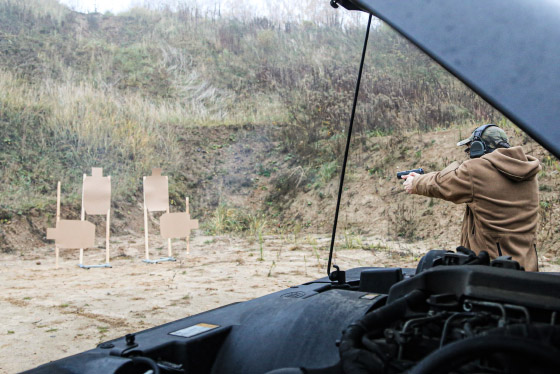
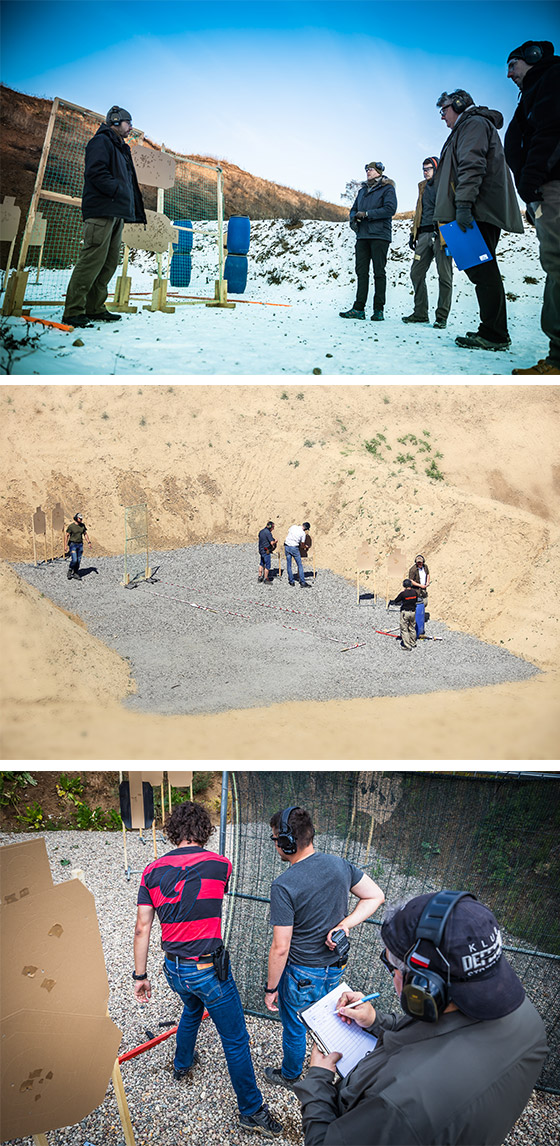
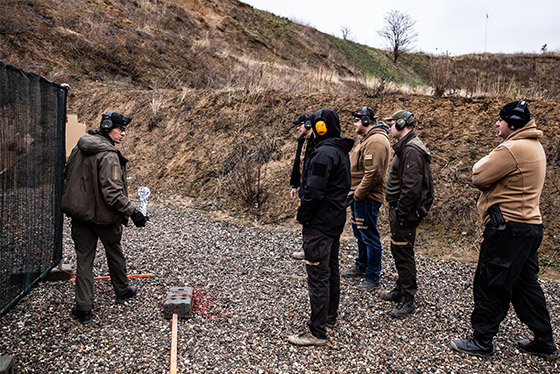
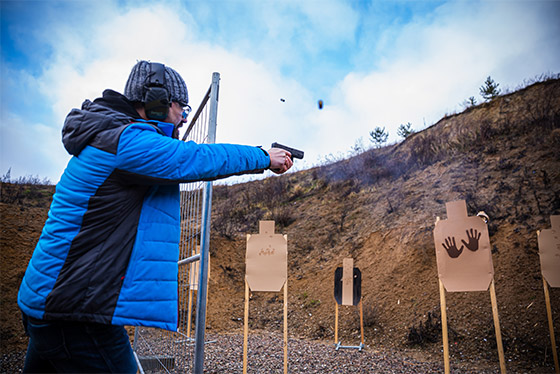
IDPA is an international sport federation for defensive shooting. It involves safely engaging targets at distances from 5 to 30m. Shooting is done statically, on the move, and also from non-standard shooting positions. Some strings of fire are shot one-handed only (weak or strong hand) using a variety of techniques.

Goals

1. Promoting the safe and skilled use of firearms and shooting equipment.
2. Enabling the practice of the sport in the form of practical shooting, allowing competitors to develop their shooting skills and friendly relations with other shooters.
3. Testing the skills and abilities of competitors, not their equipment or clothing.
4. Ensuring competition at a varied skill level. Creating conditions so that owners of different equipment and different skill levels compete only among themselves.
5. Providing a form of shooting sport with stable rules of competition and equipment.

The Four Rules of Firearm Safety

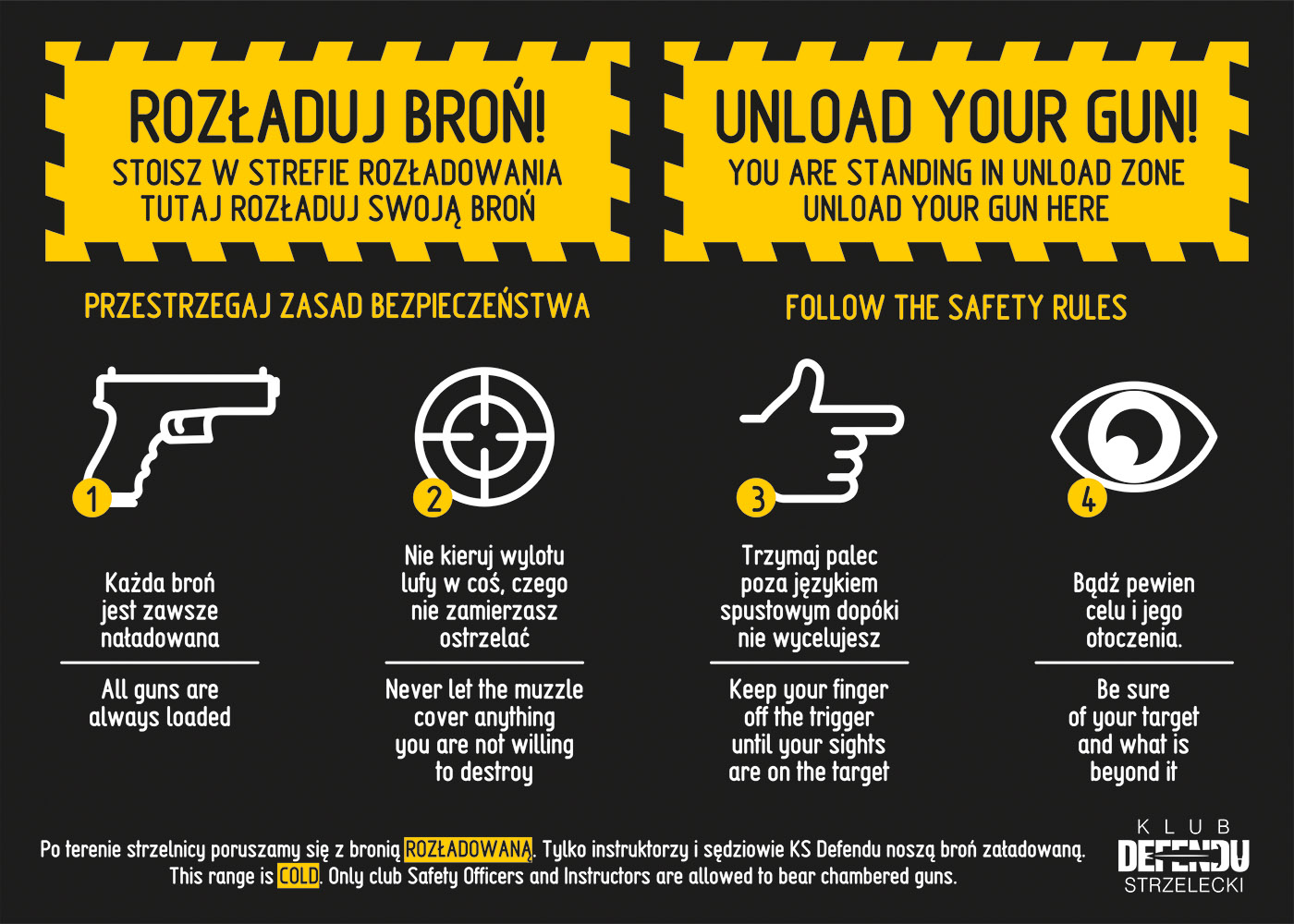
I. Every gun is always loaded
II. Never point the muzzle at anything you are not willing to destroy
III. Keep your finger off the trigger until your sights are on target
IV. Be sure of your target and what is behind it.

Additionally

Only handle firearms in designated areas.
Keep your firearm holstered and draw it only on command.
Follow the 180-degree rule.

Equipment

  • A pistol, revolver, or PCC (pistol-caliber carbine).
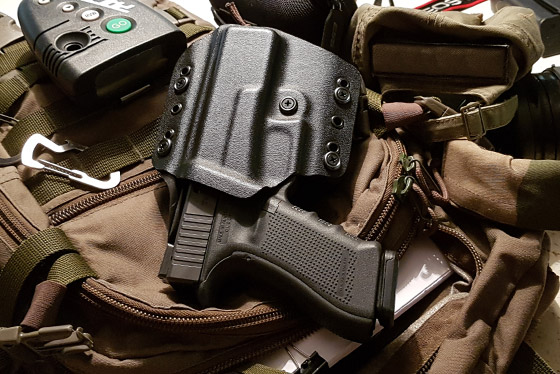
  • A holster worn on the strong-side hip.
  • A sturdy belt that holds the holster and magazine pouches securely.
  • Magazines (at least 3 recommended for a match), speedloaders, magazine pouches (at least 2).
  • Eye and ear protection.
  • Ammunition suitable for the firearm (meeting the so-called IDPA Power Factor).
  • Clothing that conceals the firearm (a vest, jacket, coat, long shirt, etc.) without interfering with drawing the gun or magazines.
  • Spare parts in case of a malfunction, and a bag to carry it all in.

Matches

IDPA matches test both the accuracy and speed of shooters.
Physical fitness plays the smallest role in your IDPA match results.
​IDPA competitors are classified at an appropriate skill level and compete in different equipment divisions.

Scenarios

A stage can be a standard stage or a scenario stage.
Scenarios require shooting at distances up to 20 yards (18.29 m) and involve frequent changes of shooting position and stance.
Standards are used to practice specific elements of shooting and gun handling. Targets may be located at distances of up to 50 yards (45.72 m).

Divisions

IDPA is divided into various equipment classes (divisions). Any firearm belonging to the SSP division may be eligible to compete in the ESP or CDP division, depending on caliber or modifications.
SSP (Stock Service Pistol) allows competition with striker-fired pistols (e.g. Glock's "Safe Action"), double-action, and double-action/single-action pistols in a caliber of at least 9mm Parabellum. A few modifications are allowed, provided they do not permanently alter the firearm's construction. Maximum dimensions are 8.75 by 6 by 1.625 inches and 43 ounces in weight. Magazines may be loaded with a maximum of 15 rounds. Example pistols meeting SSP requirements: Glock 17-19x-34-45, Sig Sauer P226-P320, CZ Shadow 1, Beretta M9.
ESP (Enhanced Service Pistol) is a division similar to SSP, but single-action-only pistols in a caliber of at least 9mm Para are also allowed, with 10 rounds per magazine. More modifications are allowed, such as magwells, stippling, aftermarket triggers, etc.
CCP (Compact Carry Pistol) allows all the modifications permitted in ESP, but is intended for compact-sized pistols. Maximum barrel length is 4.1 inches, and maximum width is 1.325 inches. Magazines may hold a maximum of 10 rounds. Example pistols: Glock 19, Sig Sauer P320 Compact, CZ P07.
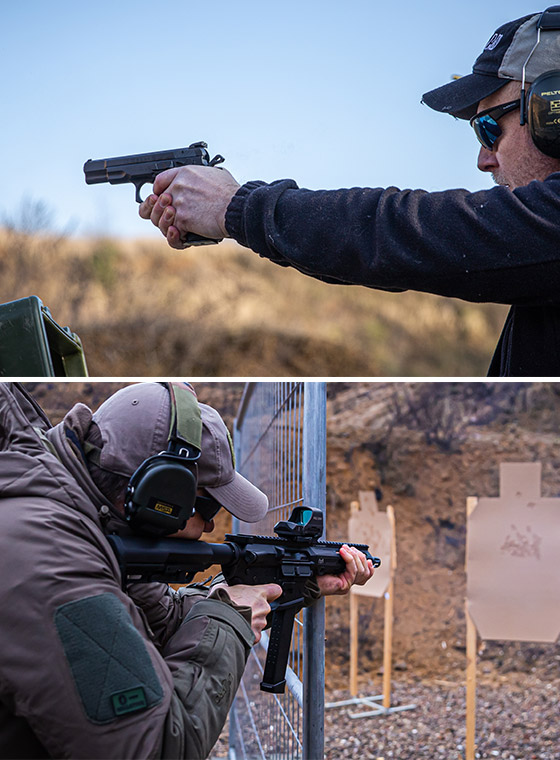
CDP (Custom Defensive Pistol) is for pistols in .45 ACP caliber. Maximum 8 rounds per magazine. This division is dedicated to Colt 1911-pattern pistols and their derivatives.
REV (Revolver) is a division that includes SR (Standard Revolver) and ER (Enhanced Revolver). SR covers revolvers in a caliber of at least .38 or larger, using rimmed cartridges, weighing a maximum of 43 ounces. The use of moon clips is not allowed. ER covers revolvers in a caliber of at least .357 Magnum, weighing a maximum of 50 ounces. The cartridge does not need to be rimmed, and moon clips may be used.
BUG (Back-Up Gun) covers pistols (BUG-S) in a caliber of at least .380, or revolvers (BUG-R) in a caliber of at least .38. Maximum barrel length is 3 1/2 inches for a pistol, 2 1/2 inches for a revolver. Maximum firearm dimensions are 1/2" x 4 5/8" x 1 3/8". Maximum weight is 26 ounces. Maximum 6 rounds per magazine for a pistol, 5 rounds for a revolver.
PCC (Pistol Caliber Carbine) covers semi-automatic firearms in 9x19, .357 SIG, .40 S&W, 10mm, or .45 ACP caliber. The firearm must be designed to be fired from the shoulder and must have a stock. Only semi-automatic firearms are permitted.
CO (Carry Optics) is a division for pistols fitted with an electronic red-dot sight. It follows the same rules as ESP, and the weight of the unloaded firearm together with the magazine and mounted sight may not exceed 45 ounces. Sights may be passive — red-dot sights mounted on the slide, suitable for concealed carry. Active sights — lasers — may be mounted on the firearm's frame, e.g. on a rail or the grip.
Classification

IDPA competitors are classified according to their skill level:
DM Distinguished Master
MA Master
EX Expert
SS Sharpshooter
MM Marksman
NV Novice
UN Unclassified
IDPA membership lets you take part in an international organization whose mission is to promote the shooting sport. It allows you to participate in local, national and international matches.

Basics

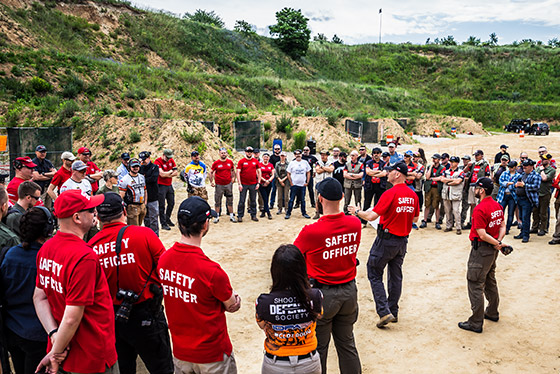
"Cold Range" means that firearms must be unloaded and holstered until the Safety Officer gives the command "Load and Make Ready." A firearm may only be handled loaded while actually shooting a stage - CoF (Course-of-Fire) - or must be UNLOADED while in the "Safe Area." The firearm must be unloaded, hammer down (striker released), holstered, with no magazine inserted or with an empty cylinder (revolvers). If you arrive at a match with your firearm in a box or case, you may only remove it from that container in the Safe Area. You may also holster it there. It must remain holstered until the Safety Officer instructs you to prepare for your stage. The Safe Area is intended for handling an unloaded firearm, e.g. removing it from or placing it in a case, holstering it, drawing it from the holster, dry-firing, or adjusting your gear. You may also inspect, disassemble, clean, or make necessary repairs to your firearm there. During all of these activities, the firearm must be pointed in a safe direction. Handling a loaded firearm, live ammunition, loading magazines, using snap caps, etc., is prohibited in the Safe Area. The Safe Area may be used by the Safety Officer to clear a malfunctioning firearm with a round in the chamber. Practicing reloads in the Safe Area is prohibited. A magazine may only be inserted into the firearm to check that its mechanism is functioning correctly, or when releasing the striker/hammer requires a magazine to be present. Violating any of these rules will result in a DQ (disqualification).
"Muzzle Safety" — the safe handling of firearms. IDPA defines 3 types of safety zones. "Muzzle Safe Points" are physical, visible limits on the line of aim. The "180-degree plane" is an imaginary vertical plane running through the center of the shooter's body, perpendicular to the shooting line, moving with the shooter along the stage. If a shooter points their firearm outside this plane, they will be disqualified. Special care should be taken not to break the 180-degree plane when holstering the firearm, since "no one ever won a match by holstering quickly." "Muzzle Exclusion Zones," on the other hand, are areas that result in disqualification if the muzzle of your firearm is pointed at them. They are used, for example, to protect door handles, to prevent a competitor from shooting themselves. Deliberately or accidentally pointing a firearm at your own body or another person results in disqualification (DQ).

Safety commands

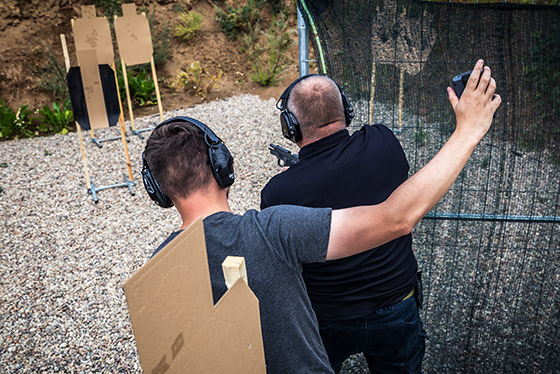
EVERYONE is responsible for safety on the range! At ANY moment, if ANYONE notices ANY unsafe situation, they are required to shout "STOP!" EVERYONE should IMMEDIATELY stop what they are doing, not move, and inform the Safety Officer or Match Director about the safety violation! The SO or MD will then assess the situation and make the appropriate decision. Safety Commands issued by the SO:
- "Muzzle!" - when a competitor brings the muzzle of their firearm close to a safety angle limit. This is only a warning to the competitor.
- "Finger!" - when a competitor keeps their finger on or near the trigger while moving through a stage. This is a warning that results in a 3-second procedural penalty (PE). If the same warning occurs a second time (even on a different stage), the competitor is disqualified (DQ).

Other commands

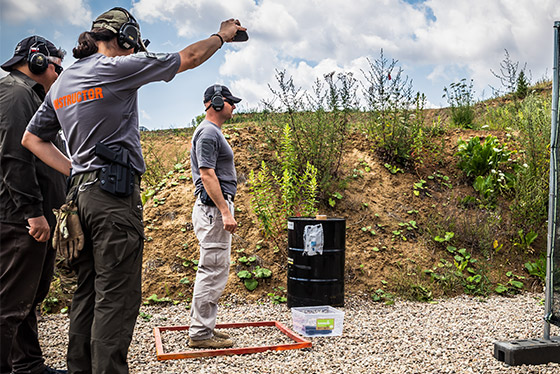
- "Range is hot" - the command announcing the start of the stage and requiring eye protection to be worn. This is the first command you will hear on the stage.
- "Load and Make Ready" - if you are ready, draw your firearm, load it, and holster it again.
- "Are you ready?" - You may answer or nod. You may also do nothing, and the SO will take that as silent acceptance. If you are not ready to begin your run, tell the range officer by answering "Not ready." You will be given another 15 seconds to prepare, and will be asked again if you are ready. If the competitor is still not ready, the SO will wait about 15 seconds once more, but the next time will order the firearm to be unloaded, assess a 3-second procedural penalty (PE), and you will start last among the competitors.
- "Stand by!" - means the start signal (the timer beep) will sound within 3 seconds, and you must begin your run.
- "If finished, unload and show clear" - if you have finished, unload your firearm and show that it is clear. This command is given at the end of the run, when the SO judges that the competitor has finished (has stopped engaging targets). You must remove the magazine from the firearm, or swing out the cylinder on a revolver, and show the empty chamber to the range officer.
- "If clear, slide forward (or close cylinder)" - if clear, release the slide (close the cylinder).
- "Pull the trigger" - pull the trigger. Point the firearm at the backstop and fire a control shot. This command is not necessary for revolvers.
- "Holster" - holster your firearm. Do this carefully; you can still be disqualified at this point if you point the muzzle in an unsafe direction or at your own body.
- "Range is clear" - means the run has ended and scoring of the stage and its reset may begin.

Tips

Do not rush. Move slowly and safely according to the stage description. Focus on moving and shooting safely and efficiently, not on your score. Pay attention to the details in the stage briefing, listen to the Safety Officer when they present the stage description, and ask questions before you start shooting. Learn the different types of reloads and avoid penalty points for mistakes; a tactical reload differs from a slide-lock (emergency) reload. The range officer is there to help you, not to dictate the stage. If you disagree with them, discuss it politely. The range officer has the final say on all rules of safety and competition. If you disagree with their decision, you can report it to the Match Director.

Scoring

PE Procedural Error - a procedural mistake (+3 seconds)
HNT Hits on a Non-Threat - hitting a target that is not a threat (+5 seconds)
FP Flagrant Penalty - a penalty for a flagrant violation (+10 seconds)
FTDR Failure To Do Right - a penalty for improperly completing a run (+20 seconds)
DNF Did Not Finish - failure to complete the stage
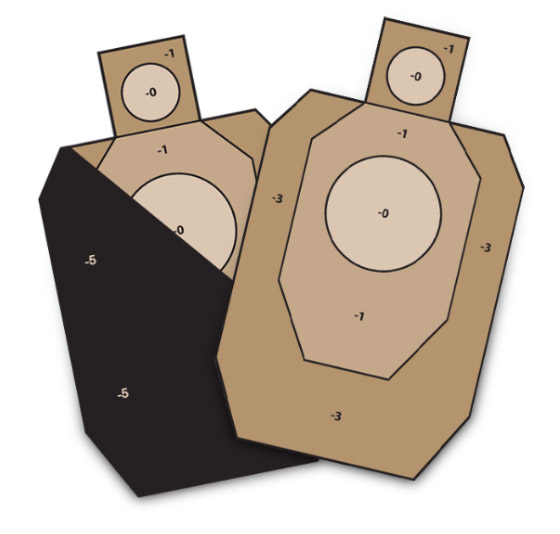
PD Points Down - the number of points deducted for inaccurate hits.

How to get started?

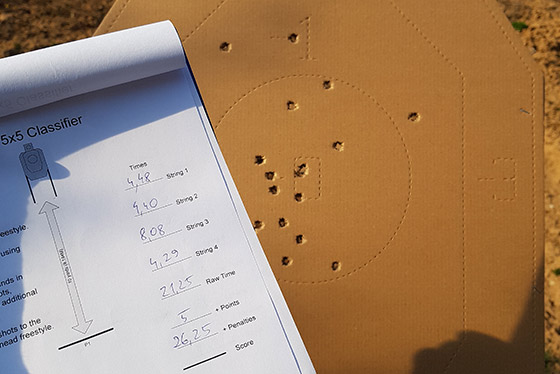
If you are wondering where to start, first join IDPA and get your individual membership number. Membership costs 50 USD per year. Then find a club where you can shoot IDPA. There are currently 4 clubs in Poland. Next, take a course in this shooting format. Whether you already shoot dynamically in other formats or this is just the beginning of your journey, we recommend taking an IDPA shooting course. At Defendu we organize one 4 times a year; you'll find the dates in the calendar. You'll learn everything about the rules and the equipment you need. Then take the classifier test - you'll need it to take part in official Level II IDPA matches and above. You can take it at any club with any registered Safety Officer, or during organized classifier events.

...

IDPA

Sign up. Membership costs only 50 USD a year.
...

Club

Choose a club where you can shoot IDPA.
...

Course

Learn the rules and gather the equipment you need.
...

Classifier

Take the classifier test and find out your skill level.
Photography by Marcin Ćwikła
Text translation by Szymon Fiedler